SMRT (Stormwater Makes Retained Treasure) Gardens are street-side and parking lot gardens that catch stormwater, clean it through plants and soil, and recharge groundwater, while cooling streets and creating habitat for pollinators.
Project Objective
The purpose of this project is to develop a prototype SMRT (Stormwater Makes Retained Treasure) Garden. These gardens are blue/ green infrastructure meant to address pollution, biodiversity loss and build urban resilience to climate change. SMRT Gardens provide education about the environment and build community pride.
What SMRT Gardens Are
SMRT Gardens are innovative street-side and parking lot gardens designed to manage stormwater by channeling runoff from streets directly into retention basins. The plants within these gardens utilize the collected water to grow, simultaneously cleaning and replenishing groundwater supplies. By integrating these gardens into urban landscapes, several environmental and community benefits are realized.
Environmental and Community Benefits
Flooding mitigation and prevention of erosion: As longer droughts and larger storms affect our cities and storm drains, SMRT Gardens make efficient use of rainwater while cleaning and recharging groundwater.
Cooling Urban Spaces: SMRT Gardens help lower temperatures on streets, parking lots, and sidewalks, creating cooler environments reducing the urban heat island effect.
Wildlife Habitat: These gardens can provide vital habitat for pollinators and other wildlife, supporting urban biodiversity.
Pollution Reduction: By filtering stormwater, SMRT Gardens take up pollutants from the streets that frequently end in waterways, lakes and oceans. SMRT Garden plants also clean the city air.
Climate mitigation: SMRT Garden plants store carbon.
Improved Quality of Life: The presence of green spaces has been linked to better mental and physical health, reduced crime and conflict, and enhanced concentration and academic performance among students.
Economic Value: Green spaces add economic value to communities and foster a sense of pride and cooperation among residents. Shoppers spend more time and money in areas near green spaces. Housing units rent for more money and houses sell higher near green spaces.
Target Areas and Educational Opportunities
Flood-prone regions are often concentrated in low-income urban districts and have substantial potential to benefit from the implementation of SMRT Gardens. Whereas modern city development and landscape codes frequently integrate bioswales into their planning, many older neighborhoods rely on conventional storm drains that are increasingly unable to manage intensified rainfall. SMRT Gardens could fill the gap.
The intentional placement of educational signage within these gardens would serve to inform the public about the consequences of pollution, climate change, and habitat degradation, while simultaneously fostering sustainability, resilience, and cohesive communities. Scientific observation of these SMRT gardens could be incorporated into citizen science projects, creating an opportunity to assist with research while educating the public.
Building Partnerships and Community Engagement
Rotary is well positioned to collaborate with community groups, schools and government to promote, design, develop and maintain SMRT Gardens. They not only beautify public spaces but also build meaningful partnerships and goodwill. These efforts contribute to the economic vitality of neighborhoods, educate and encourage a collective commitment to sustainability.
Background
For centuries, drainage ditches beside pathways have helped combat flooding and erosion, tracing their roots back to Roman times. As cities grew and surfaces became less permeable, municipalities increasingly depended on "gray" infrastructure, gutters, pipes, and culverts, to quickly channel stormwater away, often sending untreated pollutants directly into local waterways. This method led to ongoing water quality issues, worse flooding, and widespread erosion over generations. Higher urban density resulted in more groundwater extraction with less replenishment, and urban sprawl brought reduced green spaces, increased evaporation, declining urban biodiversity, and negative effects on human health, both mental and physical.
Natural streetside gardens designed to slow runoff and absorb rainwater, the concept of 'green infrastructure', first emerged in the 1990s. Agencies like the U.S. Environmental Protection Agency (EPA) promoted their use through programs such as “Soak Up the Rain,” appealing to both residential and municipal audiences. Research from the World Economic Forum showed that green infrastructure is about 50% cheaper and 28% more effective than traditional man-made solutions for rainwater management. Nature-based approaches have since earned global recognition as cost-effective and environmentally friendly ways to tackle urban flooding and water pollution.
The idea of ‘Sponge Cities,’ a holistic strategy that uses natural landscapes to reduce runoff, filter and clean stormwater, and retain groundwater, originated in China around 2010 but builds on decades of similar practices. Sponge cities can absorb much more water, recharge groundwater supplies, experience fewer floods, place less stress on storm drains, and reduce watershed pollution. They feature continuous green spaces that cool the city, boost urban ecosystems, raise biodiversity, and foster healthier, more inviting environments for people. China now boasts over 30 sponge cities, each tailored to local terrain and rainfall; these models prove that integrated landscape planning can make cities resilient and improve access to clean water, air, and biodiversity. Similar strategies are being adopted worldwide.
In the United States, green infrastructure like bioswales and rainwater retention areas are increasingly included in new, large-scale public and commercial projects, recognized as vital components of sustainable water management. However, many cities do not yet
have cohesive green (sponge) corridors. Curbside rain gardens remain rare in older, established, and underserved neighborhoods, areas critical to the urban watershed and prone to frequent flooding, often with limited green space. Recent research highlights that every surface in an urban environment matters during extreme weather events, suggesting SMRT gardens could help address this disparity.
Urban growth has also contributed to a significant decline of biodiversity through habitat loss and fragmentation. SMRT gardens include plants that aid local wildlife and pollinators. Unlike pavement or lawns, clusters of SMRT gardens in a network of public and private green spaces could provide essential habitat and connectivity for pollinators and wildlife. Integrating stormwater solutions with wildlife-friendly plants enhances the values of the SMRT garden to communities.
Implementation Plan and Partnerships
Rotarians, Rotaractors, and ESRAG members are uniquely positioned to lead in this space.
1. Make a clear call to action by partnering with ESRAG, RICON, PELs and district events:
Encourage all Rotarians/ Rotaractors/ Interactors to consider SMRT gardens within their communities. Make SMRT Gardens a flagship environmental project.
Initiate a District Challenge: 30 SMRT Gardens by 2030.
2. Build a marketing toolkit for SMRT Gardens including logos, signage templates, educational handouts, grant proposal language, social media hashtags (#SMRTGarden or # SMRTRotary) Tagline: Turning stormwater into community riches , climate resilience, pollution solution, pollinator habitat, living classroom, public pride.
3. Design a website that will guide Rotarians/ Rotaractors through the process
Outcomes
Documentation/ Citizen Science
Potential citizen science projects (documenting changes in temperature, biodiversity, flooding, pollution) are possible to define the impact of SMRT gardens. Partner with universities for a biodiversity project and local utilities or watershed groups to measure the impact of diverting stormwater for a wildlife garden.
Sustainability Vision
This project aims to encourage people to learn about environmental issues, pollution, climate change, biodiversity loss, and take confident action in their communities.
SMRT Gardens promote truth, fairness, goodwill, community empowerment, resilience, education, and economic vitality. The initiative could become a scalable, evidence-based Rotary flagship project.
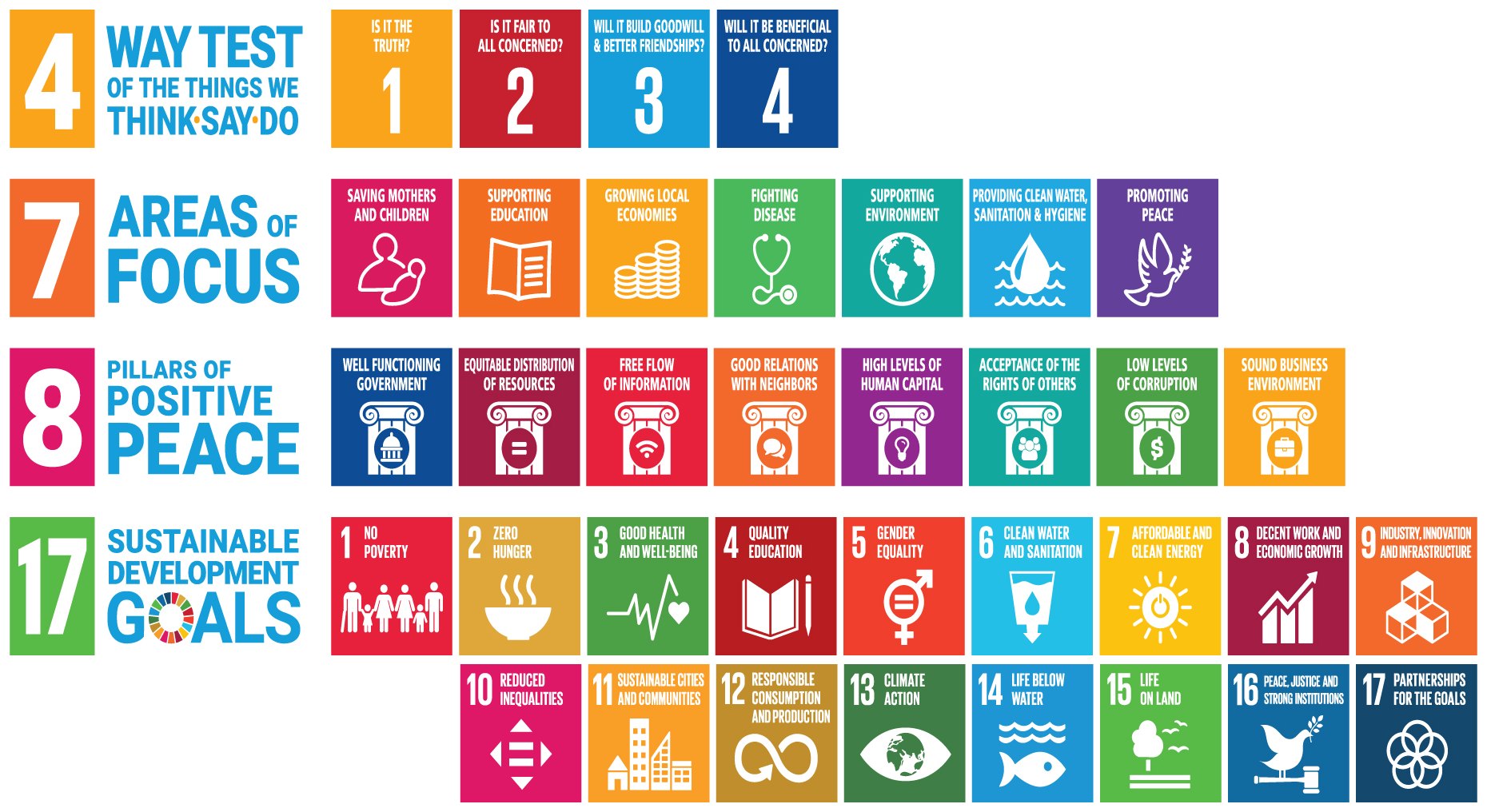
4-7-8-17 Report Card: SMRT Gardens, Solana Beach, California, USA
- Four-Way Test passed
- 4 of 4
- Areas of Focus
- 4 of 7
- Pillars of Positive Peace
- 4 of 8
- UN SDGs
- 8 of 17
Four-Way Test
- Pass Is it the truth? Grounded in proven green infrastructure science, such as the EPA's Soak Up the Rain program.
- Pass Is it fair to all concerned? Puts gardens first in underserved, flood-prone neighborhoods with little green space.
- Pass Will it build goodwill and better friendships? Neighbors, schools and Rotarians plan and care for the gardens together.
- Pass Will it be beneficial to all concerned? Less flooding, cleaner water, cooler streets and more wildlife for everyone.
Rotary Areas of Focus
- Providing Clean Water, Sanitation and Hygiene: Filters polluted runoff and recharges groundwater.
- Supporting Environment: Adds pollinator habitat, stores carbon and cools the city.
- Fighting Disease: Cleaner air and water and less flooding reduce health risks.
- Supporting Education: Gardens become living classrooms with signage and citizen science.
Pillars of Positive Peace
- Equitable Distribution of Resources: Brings green space to flood-prone, low-income neighborhoods first.
- Well-Functioning Government: Supports city climate action and stormwater plans.
- Free Flow of Information: Educational signs and citizen science share what the gardens teach.
- Good Relations with Neighbors: Shared gardens build cooperation and community pride.
UN Sustainable Development Goals
- SDG 6 Clean Water and Sanitation: Cleans stormwater and recharges groundwater.
- SDG 11 Sustainable Cities and Communities: Makes neighborhoods more resilient to floods and heat.
- SDG 13 Climate Action: Local action on flooding, heat and carbon.
- SDG 15 Life on Land: Creates habitat for pollinators and urban wildlife.
- SDG 3 Good Health and Well-Being: Cleaner air, cooler streets and green space support health.
- SDG 4 Quality Education: Living classrooms and citizen science.
- SDG 9 Industry, Innovation and Infrastructure: Nature-based green infrastructure as an alternative to more pipes.
- SDG 17 Partnerships for the Goals: Rotary working with cities, schools and community groups.
Easy upgrades
- Build and measure the first prototype garden to strengthen the truth question.
- Train local youth to build and care for gardens to add Growing Local Economies and SDG 8.
- Build the first garden with the Rotary Club of Solana Beach and launch the 30 by 2030 challenge.
Rated with the 4-7-8-17 framework, and reviewed by the 100 Projects in 100 Countries team.
Is your club or community running a project like this? Share it and get your own 4-7-8-17 Report Card.
Submit your project