KongsiKL is turning a neglected 1 km stretch of the Klang River in Kuala Lumpur into a shared community space, planting 2,000 native trees, growing a micro-forest, and running festivals, markets and youth learning programs. It is a community-led model for regenerating the entire 120 km Klang River basin.
Project Goals
Reclaim and activate riverside public space for community use through tactical urbanism and architectural interventions.
Restore ecological habitats and increase urban green space through micro-forest planting and biodiversity regeneration.
Strengthen community ownership of the river through participatory design and stewardship.
Create cultural and economic opportunities through festivals, markets, and arts programming.
Develop a replicable model of community-led river regeneration along the Klang River basin.
Executive Summary
The Klang River Activation Initiative is a 24-month community-driven urban regeneration project led by KongsiKL along a 1 km stretch of the Klang River in Kuala Lumpur. The initiative seeks to reconnect communities with the river through public space activation, ecological restoration, and cultural programming, transforming neglected riverside areas into vibrant community assets.
The project draws on the historical relationship between communities and the river, recognizing the Klang River as both an ecological system and a cultural corridor. Through tactical urbanism, artistic interventions, community markets, and environmental restoration, the initiative aims to establish a replicable model for inclusive river urbanism that can scale along the 120 km Klang River basin.
The pilot site serves approximately 6,000 low-income residents, including 500 school-age children, many of whom currently lack access to safe public spaces, cultural programming, and green infrastructure.
By activating the riverside as a shared community environment, the project strengthens social cohesion, improves environmental stewardship, and creates new livelihood opportunities for residents.
Implementation Plans
1. Ecological Restoration and Micro-Forest Creation
A large-scale habitat regeneration effort will transform degraded riverbank areas into biodiverse ecological zones. Implementation includes:
planting 2,000 native trees
establishing a 35,625 sq m micro-forest
restoring 122,664 sq m of riverside green space
reintroducing native riparian vegetation
improving habitat conditions for birds, insects, and aquatic species
Community tree planting events will engage residents, volunteers, and students in restoring the river ecosystem while building long-term stewardship. Biodiversity monitoring will track:
species diversity
tree survival rates
ecological improvements over time
2. Interactive Environmental Learning Programs
The project will deliver environmental education programs focused on river ecology and sustainability. Programs include:
workshops on river ecosystems
waste management and reduction
urban biodiversity awareness
community-led environmental stewardship
Target participants include:
secondary school students
youth groups
community residents
The program has already engaged 60 secondary school students from five schools and will continue with 30 students from two schools in a more intensive environmental learning program. Students will participate in activities such as:
biodiversity observation
environmental documentation
river ecology exploration
community presentations.
These activities build environmental literacy and encourage youth leadership in conservation.
3. Public Environmental Programming and Festival Activation
Environmental awareness will be amplified through the Klang River Festival, a multidisciplinary public event series combining environmental education with arts and culture. Festival programming includes:
environmental talks and forums
guided river walks
ecological art installations
workshops on urban farming and sustainability
community clean-up activities
The festival will feature nine main event days annually, with additional smaller events throughout the year. Attendance is expected to range between 20 and 500 participants per event, creating opportunities for broad public engagement with environmental issues.
4. Environmental Monitoring and Community Stewardship
The project incorporates an ongoing environmental monitoring framework to track ecological improvements and community engagement. Monitoring activities include:
biodiversity observation and documentation
tree survival tracking
public space usage monitoring
planned water quality monitoring
Baseline surveys of residents will measure changes in environmental awareness, public space use, and community stewardship. Community members will be encouraged to take an active role in maintaining the river environment, fostering a culture of shared responsibility for the ecosystem.
Outcomes
2,000 trees planted
35,625 sq m micro-forest established
122,664 sq m riverside habitat restored
6,000 residents benefiting from improved green space
90 youth engaged in environmental education programs
increased biodiversity along the river corridor
increased community stewardship of the river environment.
Partnerships
The initiative involves a broad network of public institutions, universities, civil society organizations, and professional bodies. Key partners include:
Kuala Lumpur City Hall (DBKL)
Ministry of Education Malaysia (MOE)
Ministry of Tourism, Arts and Culture (MOTAC)
Ministry of Energy Transition and Water Transformation (PETRA)
Department of Irrigation and Drainage (JPS)
Malaysia Institute of Planners (MIP)
Malaysia Institute of Architects (PAM)
Think City
UCSI University School of Architecture and Built Environment
Dasein Academy of Arts
Alliance of River Three
NetsEco Group
EXSIM Development Sdn Bhd
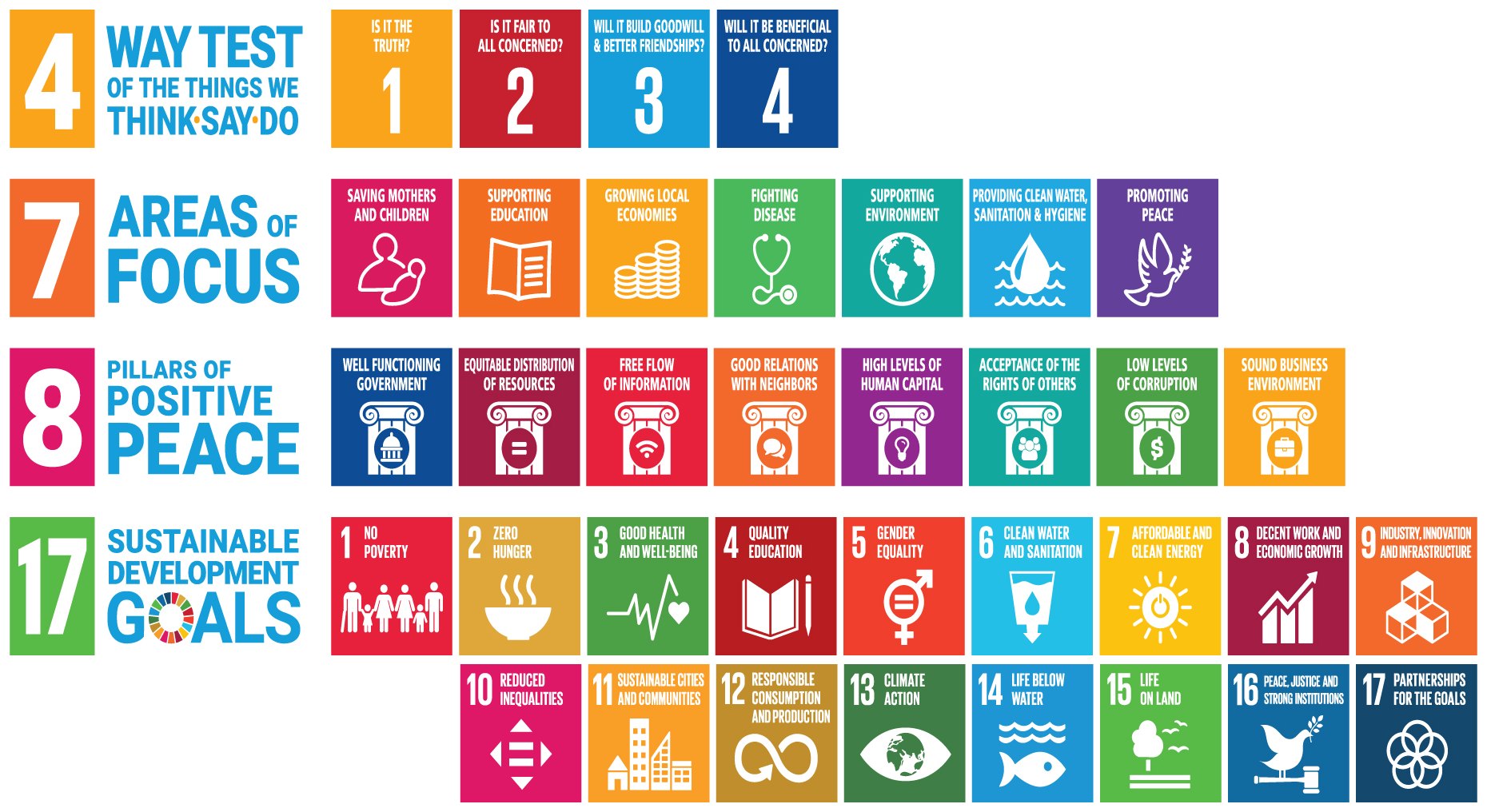
4-7-8-17 Report Card: Klang River Activation Initiative, Kuala Lumpur, Malaysia
- Four-Way Test passed
- 4 of 4
- Areas of Focus
- 4 of 7
- Pillars of Positive Peace
- 5 of 8
- UN SDGs
- 7 of 17
Four-Way Test
- Pass Is it the truth? Built on real community needs and measurable targets, such as 2,000 trees and 122,664 sq m restored.
- Pass Is it fair to all concerned? Residents from diverse ethnic and economic backgrounds get priority for markets and programs.
- Pass Will it build goodwill and better friendships? Festivals, markets and shared public space bring neighbors, artists and city partners together.
- Pass Will it be beneficial to all concerned? Cleaner river, new green space, youth learning and local income benefit residents and the wider city.
Rotary Areas of Focus
- Supporting Environment: Plants 2,000 native trees, grows a 35,625 sq m micro-forest and restores 122,664 sq m of riverside habitat.
- Providing Clean Water, Sanitation and Hygiene: Builds river stewardship and plans ongoing water quality monitoring along the Klang River.
- Growing Local Economies: Riverside markets and the Klang River Festival create income for local vendors and artists.
- Supporting Education: River ecology learning for 90 secondary students, plus workshops for children and residents.
Pillars of Positive Peace
- Good Relations with Neighbors: Shared riverside space and festivals build social cohesion across communities.
- Acceptance of the Rights of Others: Communities from diverse ethnic backgrounds are prioritized for markets and programs.
- Equitable Distribution of Resources: Brings safe green space to about 6,000 low-income residents who lacked it.
- High Levels of Human Capital: Builds environmental skills and youth leadership through hands-on programs.
- Sound Business Environment: Community markets give local sellers a place to trade.
UN Sustainable Development Goals
- SDG 11 Sustainable Cities and Communities: Turns a neglected riverside into safe, shared public space for the community.
- SDG 13 Climate Action: Trees and green space cool the city and store carbon.
- SDG 15 Life on Land: Restores riparian habitat for birds, insects and aquatic species.
- SDG 8 Decent Work and Economic Growth: Markets and festivals create local economic opportunity.
- SDG 3 Good Health and Well-Being: Safe green space supports residents' health and well-being.
- SDG 4 Quality Education: Environmental learning programs for students and youth groups.
- SDG 6 Clean Water and Sanitation: River stewardship and planned water quality monitoring.
Easy upgrades
- Publish the river water quality and biodiversity results openly to strengthen Free Flow of Information.
- Formalize the partnership with DBKL and JPS on river care to add Well-Functioning Government.
- Name social cohesion as a goal of the festival to add Promoting Peace.
Rated with the 4-7-8-17 framework, and reviewed by the 100 Projects in 100 Countries team.
Is your club or community running a project like this? Share it and get your own 4-7-8-17 Report Card.
Submit your project